Keyword Clustering: How to Group Keywords by Search Intent
Keyword clustering means grouping related search phrases so you can decide which queries belong on the same page and which deserve separate pages.
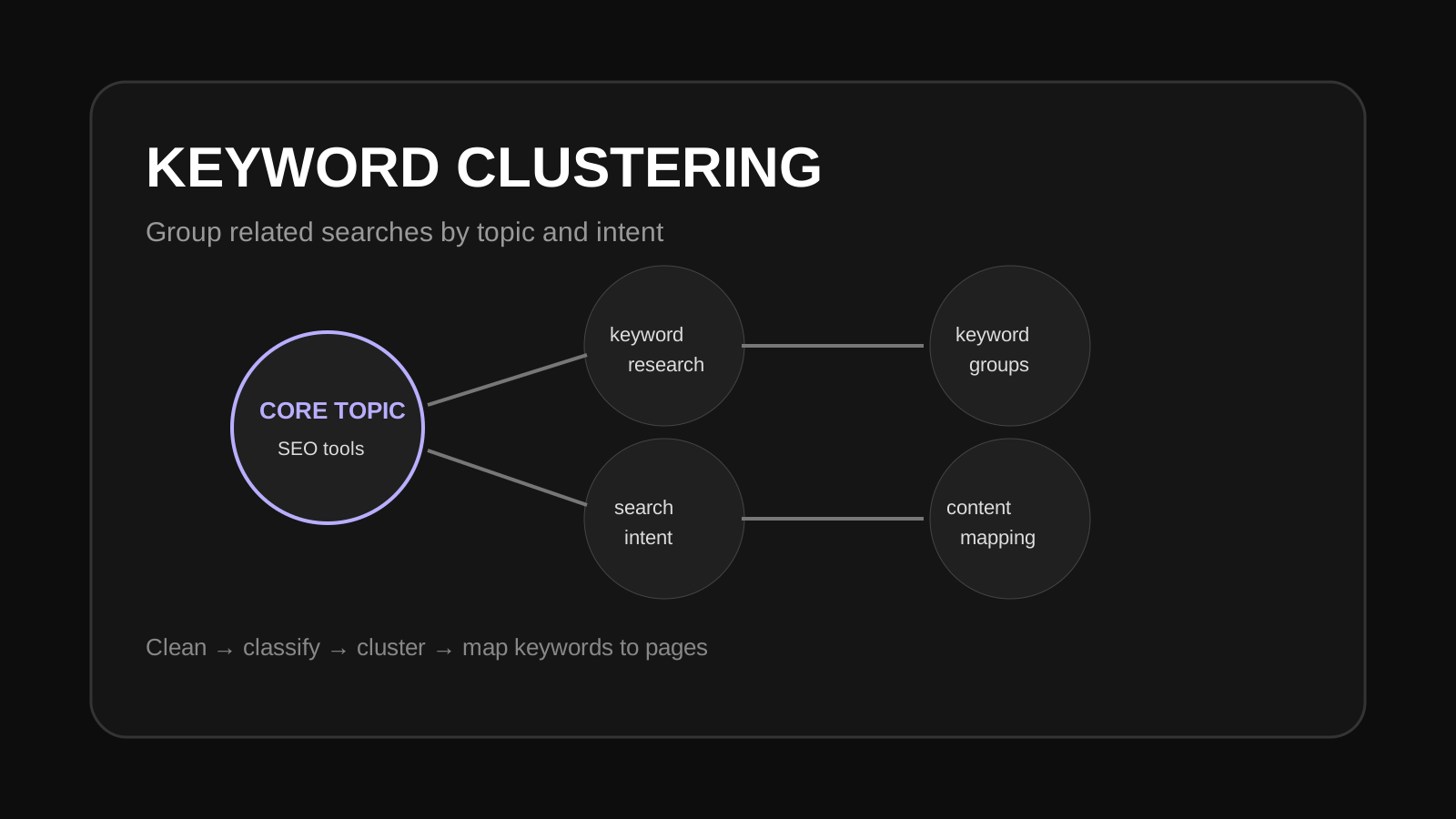
What is keyword clustering?
Keyword clustering groups search terms into sets based on meaning, intent, topic or likely page purpose. The goal is not to make the largest possible group. The goal is to make a useful group that helps with content planning and keyword mapping.
Why keyword clustering matters for SEO
A large keyword list can contain duplicates, close variants, different intents and queries that need different pages. Clustering helps turn research into a cleaner content plan and can reduce the risk of creating several pages that all target the same underlying intent.
Search intent is more important than wording
Consider phrases such as “how to check canonical tags,” “canonical checker” and “canonical URL validator.” Depending on the SERP and context, these may be satisfied by related content or separate tool pages. The words alone do not prove that the queries belong together.
Common keyword clustering methods
- Semantic similarity: group phrases with closely related meaning.
- Search intent: group phrases that expect the same type of answer or page.
- Topic modifiers: use meaningful modifiers such as location, audience or task.
- SERP overlap: when data is available, compare the pages that rank for the queries.
How to build better keyword clusters
- Clean duplicate keywords and obvious formatting differences.
- Normalize case and whitespace.
- Classify search intent.
- Identify the main topic and useful modifiers.
- Separate queries with clearly different goals.
- Map each cluster to a page or content type.
- Review the cluster manually before publishing.
Keyword clustering tools
For smaller lists, a browser-based clustering tool can help you organize phrases without uploading them to a remote service. Tool Box Kart is building keyword tools around cleaning, grouping, intent and mapping so the output can be used directly in an SEO workflow.
Browse the SEO tools to find keyword research utilities.
Keyword clustering FAQ
Should every keyword have its own page?
No. Closely related queries can often be covered by one strong page. Separate pages make more sense when the search intent or user task is meaningfully different.
Is keyword clustering the same as keyword grouping?
The terms are often used interchangeably. In practice, clustering usually emphasizes relationships between queries, while grouping can be as simple as organizing a list by a rule.
Should search volume decide a cluster?
No. Search volume is useful context, but intent and page purpose are more important when deciding which queries should be covered together.