What are SEO tools?
SEO tools are utilities that help you research search queries, inspect website signals, analyze content, create structured data, find technical problems and turn search data into actions. A useful SEO tool should explain the result instead of giving you a score with no context.
Which SEO tool should you use?
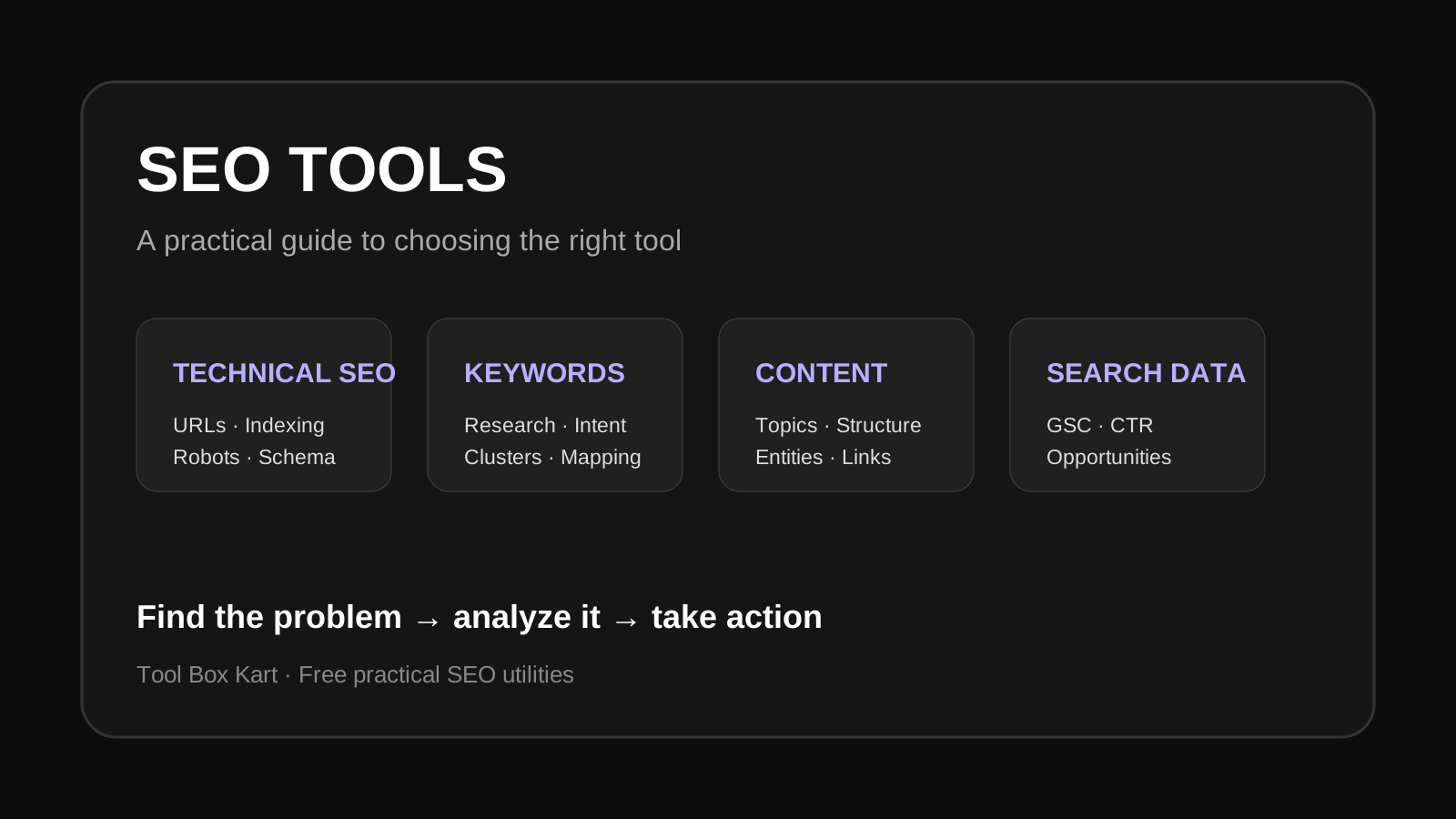
Use technical SEO tools when you need to inspect URLs, metadata, indexing signals, links, robots directives or structured data.
Use keyword tools to clean lists, group related phrases, classify search intent and build keyword maps.
Use schema generators when you need machine-readable structured data that matches the visible page content.
Use GSC tools when you have exported query and page data and want to find opportunities, CTR problems or competing URLs.
Technical SEO tools
Technical SEO tools are useful for problems that affect crawling, indexing, URLs, page metadata and how search engines understand a site. Common checks include canonical URLs, robots directives, HTTP status information, headings, links and structured data.
Do not treat every warning as a ranking problem. A good checker should separate a clear error from a recommendation that depends on the website's setup.
Keyword research and search intent
Keyword research is more than collecting high-volume phrases. Grouping similar queries, removing duplicates and understanding intent can help you build pages that answer a real search need. Search intent can be informational, commercial, transactional or navigational, and some queries can have mixed intent.
Content SEO tools
Content tools should help with structure and usefulness. Look for tools that can inspect headings, topic coverage, keyword distribution, entities, internal links and content similarity. Avoid changing wording simply to hit a target keyword density. Search engines care about whether the page is useful and relevant to the query.
Schema and structured data tools
Schema generators can save time when you need JSON-LD for an article, product, organization, local business, breadcrumb trail or other supported type. Always check that the generated properties describe information visible on the page. Structured data does not guarantee a special search result.
Google Search Console tools
GSC analysis is especially useful after you have enough search data. A CSV export can reveal queries with impressions but weak clicks, pages losing traffic, queries where several URLs appear to compete, and pages sitting within striking distance of stronger positions.
Browser-based GSC tools can be useful because you can upload an export without connecting your Google account to a third-party service.
AEO and GEO tools
Answer Engine Optimization and Generative Engine Optimization tools should focus on things you can actually inspect: question coverage, direct answers, entity context, page structure, citations and crawler access. Avoid tools that claim to know exactly how an AI model will rank or cite a page.
How to get more value from SEO tools
- Define the problem before choosing a tool.
- Use the smallest useful dataset.
- Check the tool's methodology and limitations.
- Turn findings into specific actions.
- Recheck the page after making changes.
- Use related tools as a workflow instead of treating each result in isolation.
Frequently asked questions
What is the best free SEO tool?
There is no single best tool for every SEO task. A technical checker, keyword tool, GSC analyzer and schema generator solve different problems. Choose the tool that matches the job.
Can free SEO tools replace paid SEO platforms?
Free tools can handle many focused tasks very well. Large SEO platforms are more useful when you need broad keyword databases, backlink indexes, competitive data or large-scale crawling.
Do SEO tools improve Google rankings automatically?
No. A tool can find a problem or help you create something useful, but the SEO work still needs to be reviewed and implemented correctly.
Use the Tool Box Kart SEO toolkit
Tool Box Kart is being built around practical workflows: identify a problem, analyze it, understand why it matters and take the next action. Browse the SEO tools or start with the specific tool that matches your task.