Google Gemini Notebook Changes Usage Limits on September 2
Google is changing how Gemini Notebook measures AI usage from September 2, 2026. The product will move from fixed daily feature quotas to flexible limits based on compute use.
The change gives users more flexibility, but it also makes usage less predictable at a glance. A long prompt, many sources, or an expensive generation can consume more of the available budget.
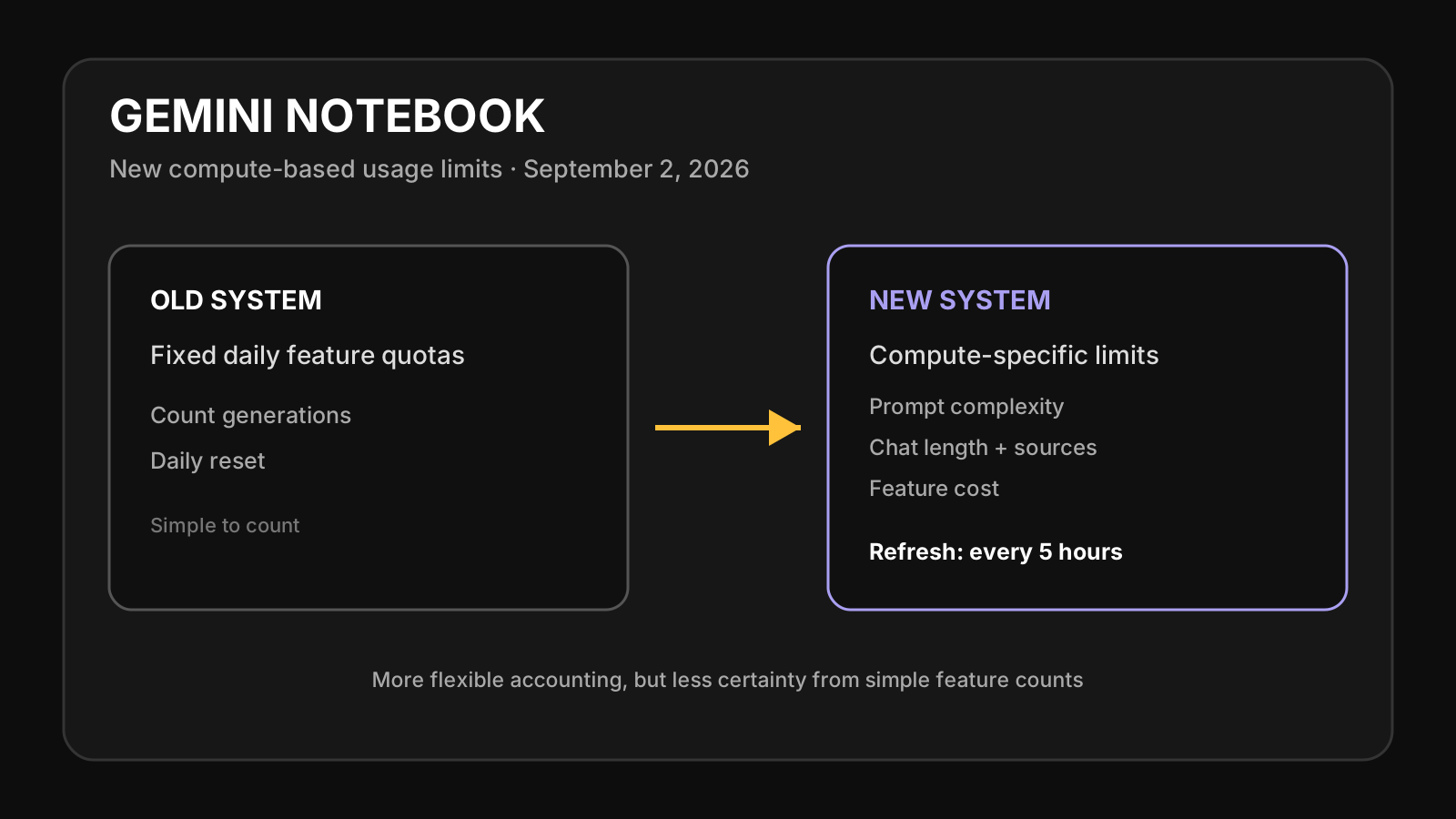
What changes in Gemini Notebook on September 2?
Google will replace the current feature-generation quota system with compute-specific limits. The company announced the change on August 28, 2026, and said the rollout starts for consumer accounts on web and mobile on September 2.
Users will no longer need to think only in terms of how many feature generations remain. The system will instead account for the work each request requires.
How will Gemini Notebook calculate usage?
Google says usage will depend on prompt complexity, chat length, number of sources, and the features used. That means two requests can consume different amounts even when they look similar to a user.
Google also plans to show usage information inside Notebook. Users can see when a limit is close and when it will reset.
What happens when a request costs more?
Notebook can suggest an alternative output when a chosen task goes beyond the available limit. Google also adds a way to defer intensive outputs until the limit resets.
Google names Video Overviews and Slide Decks as examples of outputs that users can generate later. The deferred work will run automatically after the limit resets.
How often will Gemini Notebook limits reset?
Limits will refresh every five hours instead of once per day. Google says this lets users continue working during the day instead of waiting for a daily reset.
The shorter reset window changes how users can plan larger research sessions. A user can spread expensive tasks across multiple reset periods instead of using a fixed daily allowance.
Does this mean Gemini Notebook usage will become unlimited?
No. Google still applies usage limits, and the new system changes how the limit works. Users can reach a limit based on the compute required by their work.
The change also makes simple quota comparisons harder. A feature count does not tell the user exactly how much work remains because request cost can vary.
Why does compute-based usage matter for heavy AI workflows?
Research notebooks can combine long chats, many sources, and generated media. A quota system based only on feature counts can treat very different workloads as similar tasks.
A compute-based system gives Google a way to price usage around workload cost. For users, that can be more flexible, but it also requires more attention to what each request consumes.
What changes for researchers and content teams?
People who work with large source sets should expect usage to rise with longer conversations and more inputs. A workflow that imports many documents can use more of the available budget than a short question.
Content teams can reduce waste by planning which outputs need deeper processing. They can also save expensive generations for tasks where the final output has clear value.
Is Google changing Gemini Notebook features too?
Google does not describe this announcement as a feature removal. The company says users will continue to access the existing features while the usage system changes.
The main change is the accounting model. Notebook will measure available compute instead of giving users a simple daily count for each feature.
How does the new system compare with fixed daily quotas?
Fixed quotas are easier to understand because the user can count remaining generations. They can also waste capacity when a simple task consumes the same quota as a complex task.
Compute-based limits can match usage more closely to real workload cost. The trade-off is that users get less certainty from a simple feature count.
What should frequent users watch after September 2?
Watch the limit indicator during long sessions. Pay attention to source count, chat length, and expensive outputs because Google says those factors influence usage.
Also check whether your normal workflow reaches the limit before the five-hour reset. That gives a better picture of the plan's practical capacity than a feature count alone.
What does this tell us about AI product pricing?
The change shows a wider move toward usage systems that reflect model and compute cost. AI companies can serve simple requests cheaply while charging capacity against more demanding work.
For users, that makes raw feature counts less useful as a measure of value. The better metric is how much useful work a plan completes before the next reset.
Teams that compare AI tools should track actual tasks completed per billing period. A practical evaluation should include research time, generation limits, retries, source capacity, and the quality of final outputs.
What should you do before the September 2 rollout?
There is no required migration step for normal users based on Google's announcement. The update rolls out to consumer accounts on web and mobile from September 2.
It makes sense to record a few common workflows before the change. Note how many sources you use, how long your chats run, and which Studio outputs you generate.
For teams measuring AI visibility or content workflows, separate tool limits from search performance. Google Search already reports generative AI visibility in Search Console, while Gemini Notebook measures usage inside a separate product. The metrics answer different questions.
How does this affect SEO and AI-search teams?
The direct SEO impact is limited because this is a Gemini Notebook usage change. It does not change Google's published Search ranking guidance.
It still matters for AI-search teams that use Notebook for research. The workload cost can affect how teams process source material, compare competitors, or review large content sets.
For technical SEO work, a Article Schema Generator can speed up structured data creation after research is complete. A Canonical Checker can then verify the preferred URL before publication.
Tool Box Kart also covers recent Google AI Search changes. The AI Overviews auto-expand update is a useful example of why interface changes and usage changes need separate tracking.
Google Gemini Notebook Usage Limits FAQ
When do the new Gemini Notebook limits start?
Google says the new limits start rolling out to consumer accounts on web and mobile on September 2, 2026.
How often do Gemini Notebook limits reset?
Google says the new limits refresh every five hours instead of refreshing daily.
What factors affect Gemini Notebook usage?
Google says prompt complexity, chat length, number of sources, and the features used affect the overall usage limit.
Can Gemini Notebook generate an output after I reach the limit?
Google says users can defer some outputs until the limit resets. The company names Video Overviews and Slide Decks as examples.
Does this change Google's SEO ranking system?
No. This announcement concerns Gemini Notebook usage limits. Google has not announced a Search ranking change in this product update.
Sources
- Google Blog: We’re introducing flexible usage limits for Gemini Notebook
- Google Search Central: AI features and your website
Related on Tool Box Kart: Google AI Overviews auto-expand and Canonical Checker.