Google.org and Jigsaw announced on September 22, 2026 that their Sensemaking AI program is expanding through a partner program for local governments. The tools are designed to help public leaders gather and analyze large amounts of community feedback. Google says the program can support large-scale civic conversations at no operational cost for participating localities.
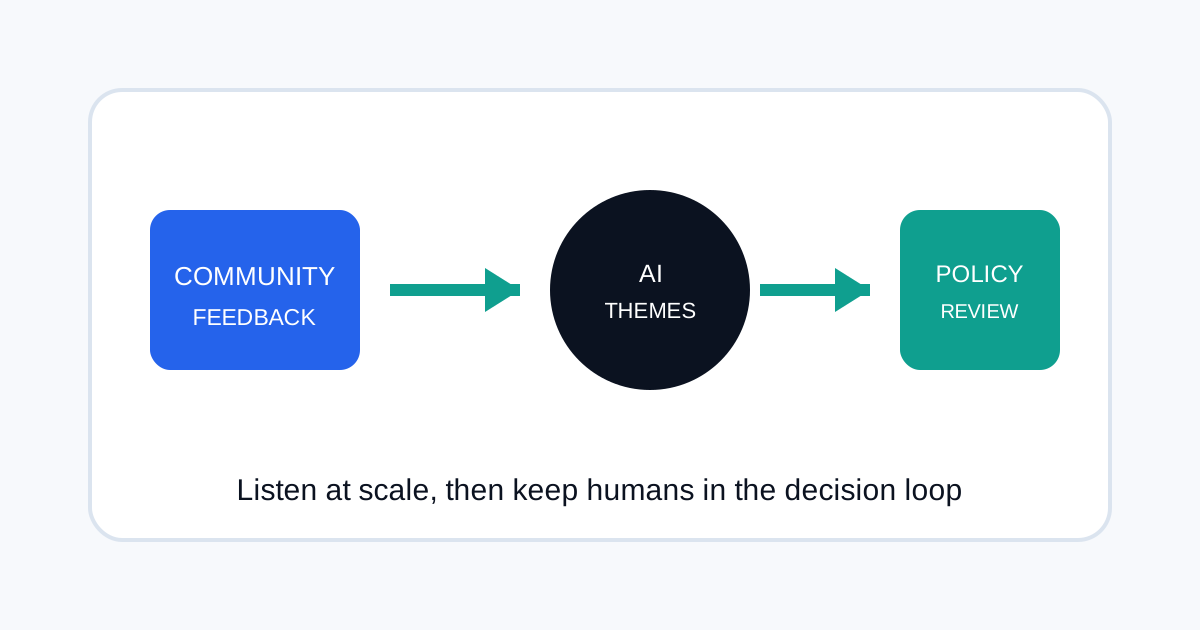
What Sensemaking AI is
Jigsaw, a Google technology incubator, launched Sensemaking AI as a suite of open-source tools for public leaders. The goal is to make it easier to listen to many residents at once and turn large amounts of feedback into useful themes.
Google says the new Jigsaw Partner Program is intended to help more cities use these tools for civic conversations. It also says cities including Bowling Green, Chattanooga, Riverside and Kitchener are using or exploring the approach.
What the workflow looks like
- Collect feedback. Gather survey responses, public comments or other approved community input.
- Structure the data. Remove duplicates, identify missing fields and separate personal information that should not enter the analysis.
- Group themes. Use the AI workflow to identify repeated topics and differences across communities.
- Review the evidence. Human reviewers check whether the themes actually match the source responses.
- Use insights carefully. Treat AI output as research support, not as an automatic policy decision.
Why the human review step matters
Community feedback is messy. People use different words for the same problem, while a small but important concern can be buried inside a large dataset. An AI system can help organize that information, but the grouping still needs review.
Public-sector teams should also consider whether sensitive personal information appears in the source material. The safest workflow is to minimize data before it reaches an AI processing system and to define who can access the raw responses.
What local governments can measure
| Measure | Useful question |
|---|---|
| Coverage | Which communities contributed feedback? |
| Theme frequency | Which topics appear repeatedly? |
| Geography | Do priorities differ between areas? |
| Change over time | Did concerns change after a policy or announcement? |
| Human review | Can officials trace an insight back to source feedback? |
What this means for AI product and research teams
Sensemaking AI is a good example of a different AI workflow: the model is not being asked to invent a policy. It is being used to reduce the effort needed to understand a large body of human input.
That pattern can also apply to research, customer feedback and SEO research. The useful design is to keep the source data visible, make the grouping explainable and let a human decide what action follows.
How to avoid bad AI summaries
- Keep representative source examples for every major theme.
- Check whether a theme is supported by many independent responses or repeated copies.
- Look for minority views instead of optimizing only for the largest cluster.
- Separate factual observations from policy recommendations.
- Document what data was excluded before analysis.
What Google announced and what it did not
Google says the partner program is supported by Google.org and philanthropic partners and that local governments can express interest. That is different from saying every city automatically receives a production system or that AI will replace public consultation.
The program is best understood as an AI-assisted civic research workflow. Officials still own the policy decision and should be able to explain how evidence was used.
Frequently asked questions
Is Sensemaking AI a Google Gemini product?
Google describes Sensemaking AI as a suite created by Jigsaw. The September 22 announcement focuses on the partner program and civic-feedback workflow rather than presenting it as a standard Gemini consumer feature.
Can any local government use it?
Google says local officials worldwide can express interest in the Jigsaw Partner Program. Availability and participation should be confirmed through the program itself.
Should AI output decide policy?
No. AI-generated themes can support research, but officials should review the evidence and make the policy decision.