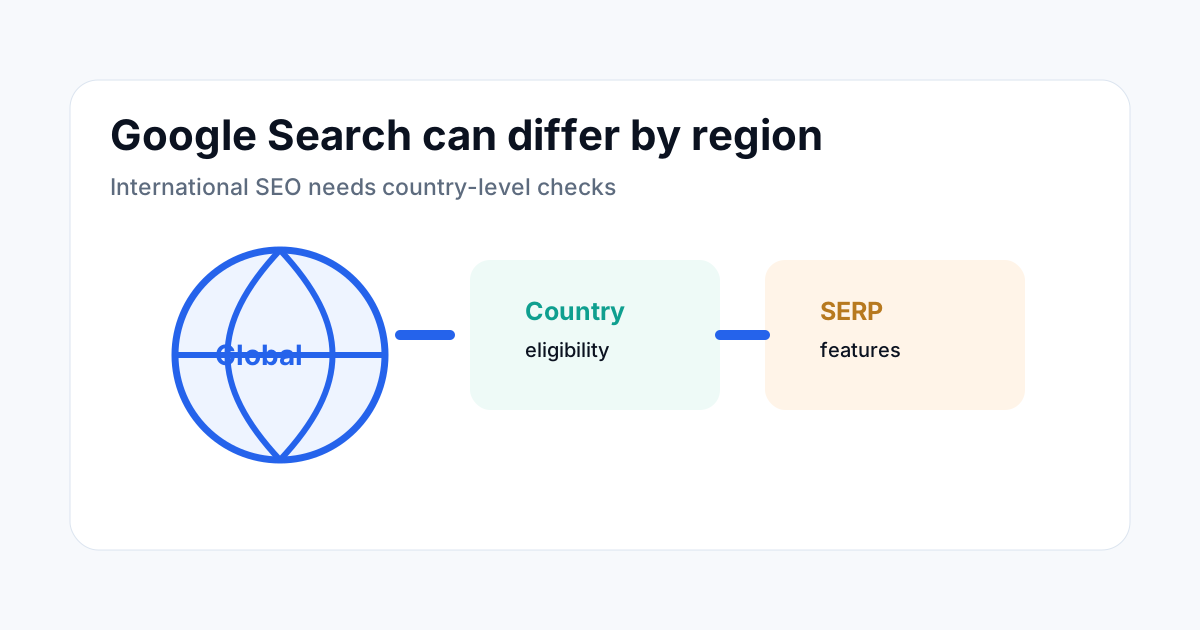
Google added documentation on September 8, 2026 explaining that Search experiences can differ by country. The change matters for international SEO because a page can face different Search features, eligibility rules and result formats across markets.
What Google changed
Google's Search documentation now includes a section on regional differences in Search experiences. It covers features that may be available only in some countries, including aggregator units, supplier units and carousels, and explains that eligibility can depend on the market.
This is not a new ranking algorithm announcement. It is a documentation update that helps site owners understand that Search does not present exactly the same feature set everywhere.
Why regional Search matters for international SEO
International SEO often starts with language, hreflang and country targeting. But Search presentation is another layer. Google can expose different SERP features in different markets, which means the same page may have different visibility opportunities depending on the user's location.
This creates a simple reporting problem: one global ranking view can hide important country-level differences. SEO teams should compare performance by market rather than treating a single global SERP layout as universal.
Search features can have market-specific eligibility
Google's documentation update is useful because it connects specific Search experiences with regional availability and eligibility. A feature that supports travel, products, suppliers or aggregators may not be available in every country.
That means a missing SERP feature in one market is not automatically an implementation failure. First verify whether Google offers and supports the feature in that region.
What to audit on an international site
| Area | Check |
|---|---|
| Country targeting | Confirm language and regional intent match the page. |
| Hreflang | Check reciprocal mappings and valid locale codes. |
| Structured data | Use only markup that matches visible page content and eligibility. |
| Search features | Check the feature's regional availability before diagnosing a loss. |
| Reporting | Segment Search Console and rank data by country. |
How to separate regional changes from ranking changes
Suppose a travel site sees a traffic change in India but not in the UK. That difference is a signal to investigate the country-specific SERP environment before blaming a broad algorithm update.
Compare impressions, clicks, average position and page groups by country. Then inspect example queries manually in the affected region. Look for changes in SERP features, local intent and feature presence.
Do not treat SERP features as proof of an algorithm update
Google's own documentation separates Search experience changes from ranking systems. A feature appearing or disappearing can change click distribution without being a core update.
ToolBoxKart's existing Google core update tracker is useful when you need to verify whether a confirmed algorithm rollout overlaps with your traffic changes.
Regional Search and AI features
Google's AI Search products already vary by language and market. The broader lesson is the same: optimize and measure where users actually search instead of assuming that a global result page represents every audience.
This is especially important for publishers and ecommerce sites. A page may have the same content and structured data everywhere while its exposure to special Search experiences differs by market.
How to build a better international SEO report
Start with country-level clicks and impressions. Add ranking or SERP-feature observations for important queries. Then track indexation, canonical selection, hreflang health and conversion by market.
Keep a change log for meaningful Search updates. When Google publishes regional documentation, record the date and the affected Search features. This is more useful than a vague note saying that rankings changed.
Practical workflow for SEOs
Choose the five to twenty most valuable queries for each target market. Check their current SERP features. Confirm that the relevant landing pages are indexed and properly localized. Compare the same query family across countries, then look for differences in Search features, intent and click behavior.
Do not automatically create country pages just because a feature exists in another market. Create or improve localized content only when there is a real user and business need.
Related ToolBoxKart guides
For the general regional Search update, read Google Regional Search Experience: What Changed. For AI visibility by market, see Google AI Search Visibility Report. For Search Console measurement, use the Search Console AI Performance Report Guide. For ranking changes, check the Google Core Update Tracker.
Frequently asked questions
Did Google announce a new algorithm update?
No. The September 8 change is documentation about regional differences in Search experiences, not a confirmed ranking algorithm update.
Which Search features were mentioned?
Google's update specifically discusses regional Search features such as aggregator units, supplier units and carousels.
Should international SEO reporting be split by country?
Yes. Country-level reporting helps separate regional Search behavior from broader ranking changes and makes traffic patterns easier to interpret.
Sources
- Google Search Central — Latest documentation updates
- Google Search Central — Search Central Live announcements