Google says it is adding a new reporting view for AI Max campaigns that brings the Search ads journey into one place. The planned view will show the search terms that triggered ads, the creative assets a user saw, and the landing page they reached. Google announced the change on September 23, 2026, but says more availability details will be shared later this year.
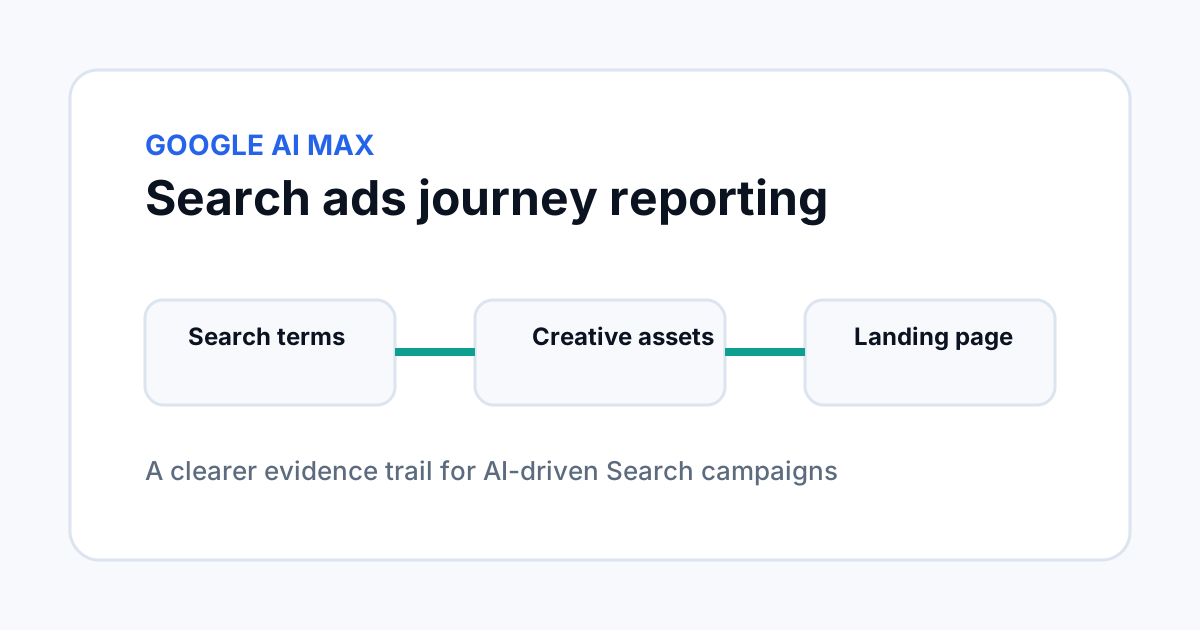
What the new AI Max report is designed to show
The main change is a combined view of the path from a search to an ad experience and then to a landing page. Google says advertisers will be able to see which search terms triggered ads, which creative assets were shown, and where the user landed.
That is useful because AI-driven campaign systems can make it harder to understand the exact connection between a query, an asset choice and the destination page. Putting those signals together can make campaign review more practical.
Why a unified view matters for search reporting
Traditional paid-search reporting often starts with keywords or search terms and then moves through clicks, conversions and landing pages. AI Max introduces more automation into the selection of matches, assets and other campaign decisions. A combined report can help marketers inspect that chain without stitching together several reports by hand.
The important shift is not that every search will become explainable. It is that teams get a clearer evidence trail for reviewing what the system actually did.
How to build your reporting workflow now
- Create a baseline. Record current search-term, creative and landing-page performance before the new report is available in your account.
- Group by intent. Separate branded, product, research and high-purchase-intent queries so automation changes are easier to interpret.
- Map assets to landing pages. Keep a clean list of the landing pages each asset or message is designed to support.
- Measure business outcomes. Track conversions, qualified leads and revenue alongside click-level metrics.
- Review unusual paths. Look for search terms that trigger strong creative engagement but send users to weak or mismatched destinations.
What the report can and cannot tell you
| Question | What the view can help with | What still needs separate analysis |
|---|---|---|
| What triggered the ad? | Search-term visibility. | Whether the query was genuinely valuable to the business. |
| What did the user see? | Creative asset visibility. | Message quality and brand fit. |
| Where did the user land? | Landing-page path. | Page quality and conversion friction. |
| Did automation improve performance? | Better evidence for before/after analysis. | Full causal attribution across the account. |
The report should therefore be treated as an observability layer, not a replacement for experiment design. A unified view helps you inspect the system; it does not automatically tell you why performance changed.
AI Brief is also expanding
Google also said the closed beta of AI Brief is expanding to Dutch, French, German, Italian, Japanese, Portuguese and Spanish. AI Brief lets advertisers provide context about their business, audience and key messaging in their own words.
The reporting feature and AI Brief solve different problems. AI Brief is about giving campaign automation more business context. The new reporting view is about giving marketers more visibility into the resulting path.
How this connects to technical marketing workflows
Paid search data should not sit in isolation from the rest of the marketing stack. Once query, creative and landing-page data can be inspected together, teams can use the same URL and page taxonomy they use for SEO and conversion reporting.
For example, a landing page that performs well for organic traffic but poorly when reached from AI-generated ad combinations may need a message-matching review. The right comparison is between the user's intent, the ad promise and the page experience.
For API-focused campaign automation, see our Google Ads API v24.2 guide.
What to watch during rollout
Google has not yet published full availability details for the new report. During rollout, check which campaigns and account types get the feature, how much historical data is available, and whether the interface exposes the same fields through downloadable or API-accessible data.
Until then, keep your existing reporting pipeline intact. The new interface should add evidence, not become a single point of failure for campaign measurement.
Frequently asked questions
Is the new AI Max reporting view available to every advertiser?
Google announced the feature on September 23, 2026 and said additional details and availability would be shared later in the year. Access may therefore vary during rollout.
What three parts of the journey will the report connect?
Google says the new view will connect search terms that triggered the ad, the creative assets the user saw, and the landing page they reached.
Does the new report prove that AI Max caused a performance improvement?
No. It provides more visibility into the journey. Causal analysis still needs controlled comparisons, consistent measurement and business outcome data.