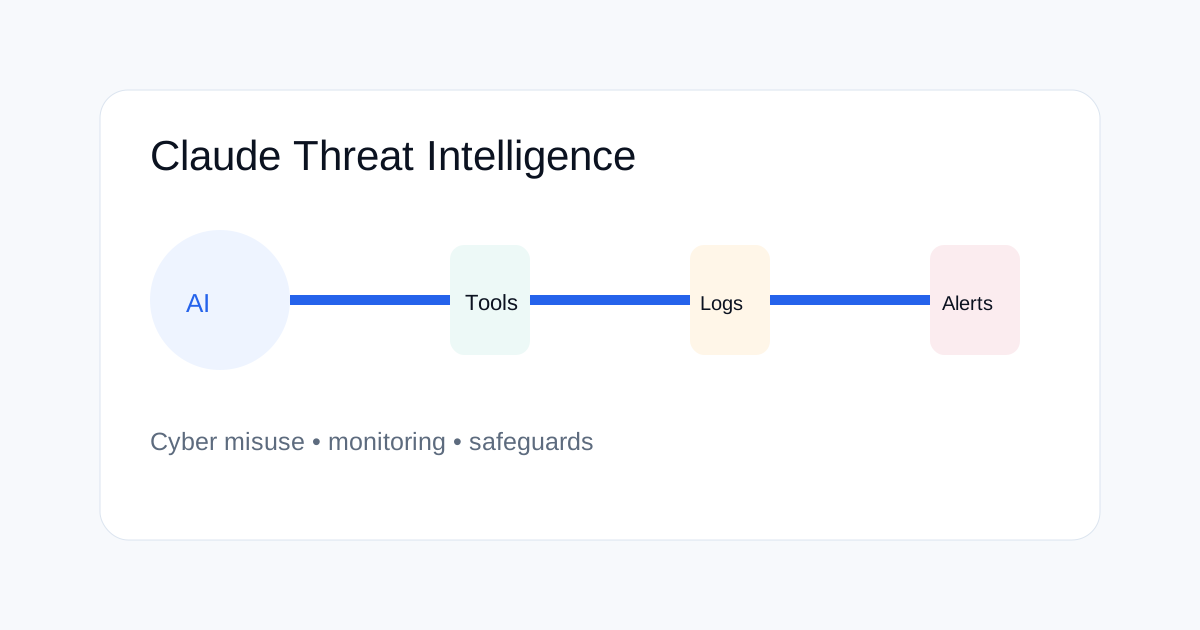
Anthropic's latest threat reporting shows a growing shift in how attackers use Claude: less focus on one-off harmful prompts and more focus on longer workflows involving research, coding, targeting and repeated actions. The lesson for teams is to secure the whole AI system, not only the model response.
What the new Claude cases show
Anthropic has described misuse involving cyber operations, espionage, fraud, surveillance and weapons-related research. Reuters also reported the company's September 2026 disclosures about several harmful operations using Claude.
The important shift is workflow length
A single prompt can be blocked or reviewed. A tool-enabled agent can inspect a result, choose the next action and continue. That creates more places where security controls can fail.
Why model safety alone is not enough
Organizations should control tools, credentials, network access, file permissions and external side effects. A model with browser access or code execution has a different risk profile from a model used only for drafting text.
What security teams should log
Record the agent identity, requested tool, target system, permission state, approval, result and external side effect. Avoid storing secrets or unnecessary sensitive content. The goal is to reconstruct important actions after an incident.
How to reduce AI attack paths
- Give each agent the smallest useful permission set.
- Separate read access from write access.
- Require approval for high-impact actions.
- Use rate limits and network controls.
- Test stop conditions before production use.
What this means for AI adoption
The right response is not to avoid AI. It is to treat AI-connected systems as software with identities, permissions and failure modes. Security review should happen before a model is connected to production data or external actions.
Related ToolBoxKart guides
Read Anthropic's earlier threat intelligence review, How to Audit AI Agent Permissions, AI Agent Audit Logs, and AI Agent Architect.
Frequently asked questions
Does the report mean Claude is unsafe for normal work?
No. It documents misuse cases and highlights the need for controls around advanced AI systems.
Why are agents harder to secure?
They can take several actions and interact with external systems, so a failure can have effects beyond a single model response.
What should companies do first?
Inventory AI-connected systems and reduce permissions to the minimum needed for each workflow.