OpenAI is rolling out GPT-6 in ChatGPT with a new capability called Intelligent UI. The main change is that ChatGPT can choose interactive elements such as charts, buttons, forms and small task interfaces instead of always returning a plain block of text. The rollout started with Plus, Pro, Business and Enterprise users on October 7, 2026, and OpenAI says Free and Go access starts October 8. The update changes the way an answer can be used, not just the model behind it.
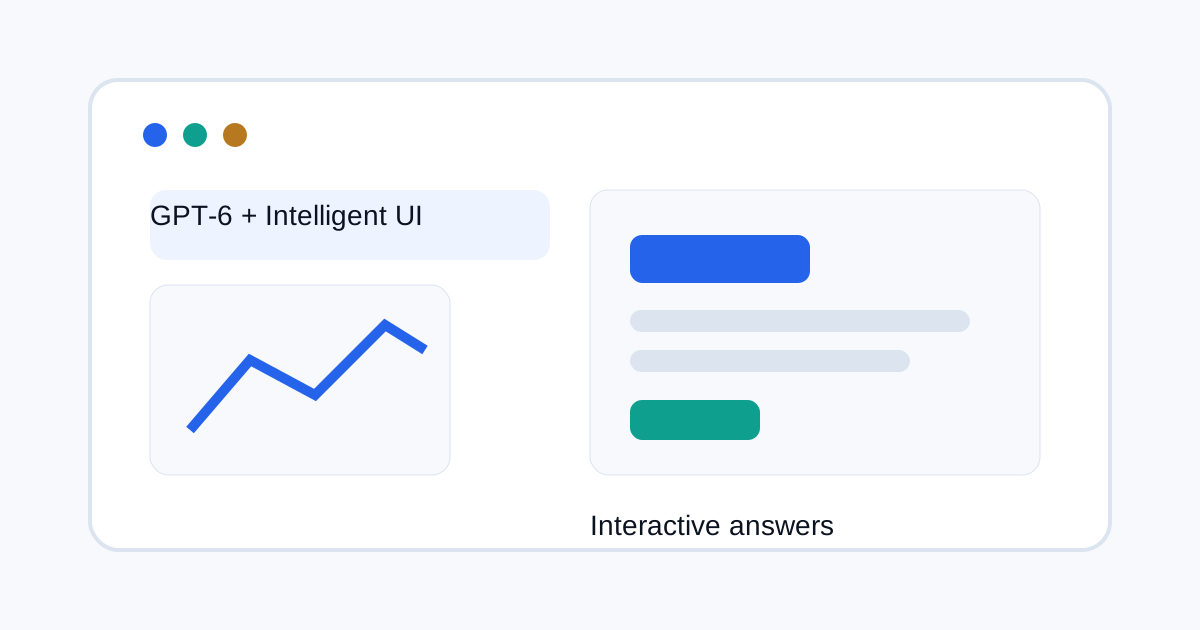
What Intelligent UI adds to ChatGPT
OpenAI describes Intelligent UI as a GPT-6 capability that composes responses from text, visuals and interactive elements. Depending on the task, a response may include a chart, a form, tappable controls, an interactive explanation or another small interface.
That means the model is no longer limited to choosing words as the final presentation layer. It can decide that a structured or interactive response is more useful for the task.
How the rollout works
OpenAI says GPT-6 with Intelligent UI is rolling out globally in the Chat tab. Plus, Pro, Business and Enterprise tiers are receiving the feature first. Free and Go access starts October 8, while Enterprise availability can depend on workplace administrator settings.
OpenAI says GPT-6 in ChatGPT uses GPT-6 Sol for Plus, Pro, Business and Enterprise tiers and GPT-6 Luna for Free and Go tiers. The company also says the models powering Work and Codex are not changing as part of this release.
What this changes for everyday tasks
The practical difference is easiest to see in tasks where the answer has structure. A comparison can become a side-by-side view. A planning task can show steps or a visual timeline. A learning question can become an interactive explanation where the user changes an input and sees the result.
For people who use ChatGPT for research, SEO or reporting, this can reduce the gap between asking a question and building a small working output. It does not mean every answer will become an app. OpenAI says the format depends on what the user is asking.
What developers and teams should understand
This release is about the ChatGPT experience. It is not a new API architecture for developers, and OpenAI explicitly separates the Chat experience from the models used in Work and Codex in this announcement.
For teams building workflows around ChatGPT, the useful change is the richer human interface. A result can be easier to inspect when the information is shown in a useful visual or interactive form. But teams should still verify important numbers and business decisions against source data.
For related model context, see our GPT-6 Sol and Luna guide and our OpenAI Dots guide.
What is still unclear
- OpenAI has not described every type of interactive component that will be available for every user or prompt.
- Enterprise access can depend on administrator settings.
- The announcement does not say that every ChatGPT answer will use Intelligent UI.
- The Work and Codex model experience is outside this specific release.
What users should do now
- Try the same task in a normal text prompt and see whether ChatGPT chooses a richer format.
- Use interactive output for exploration, but verify important facts against the underlying source.
- For business workflows, keep sensitive actions behind normal access and approval controls.
- Do not treat a visual answer as proof that the underlying data is correct.
Frequently asked questions
What is GPT-6 Intelligent UI?
It is a ChatGPT capability that lets GPT-6 compose answers using text, visuals and interactive elements such as charts, forms and buttons.
When does GPT-6 Intelligent UI reach Free users?
OpenAI says the rollout expands to Free and Go tiers starting October 8, 2026.
Does Intelligent UI change Codex?
Not in this release. OpenAI says the models powering Work and Codex are not changing as part of the ChatGPT update.