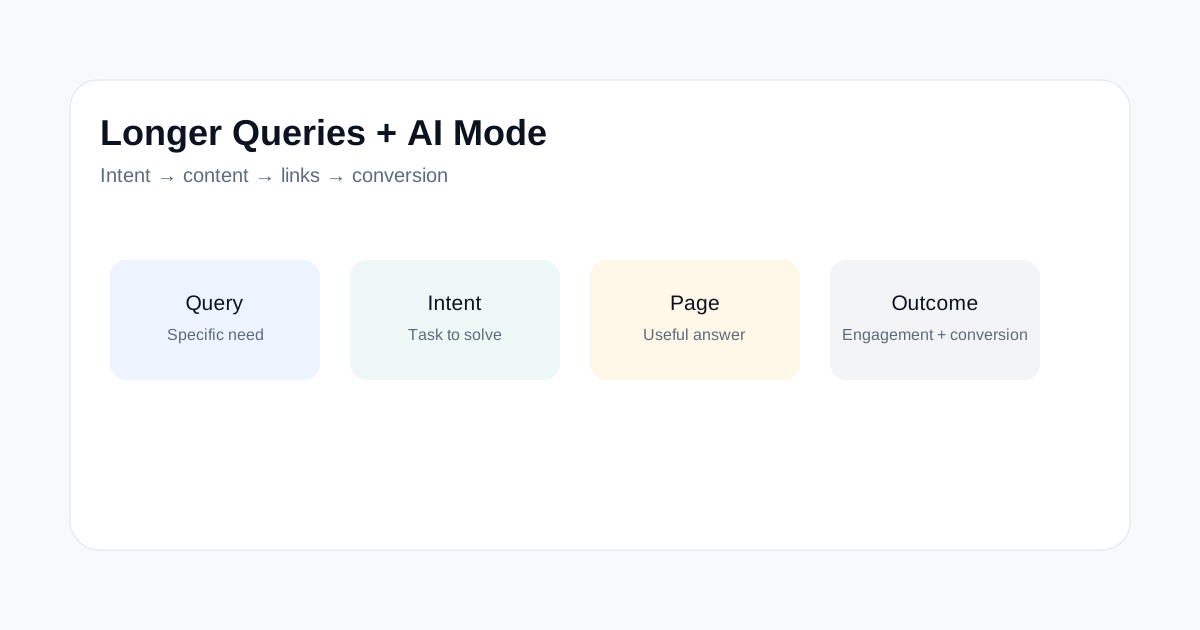
Recent Google Ads data suggests longer, more specific searches are gaining impression and conversion share as AI-powered search changes how people express their needs. The SEO response should not be to stuff more long-tail phrases into pages. It should be to understand the full task behind a query and build pages that answer it clearly.
Why longer queries matter
A longer query often contains more context: a product constraint, location, use case, comparison or problem. That can make intent easier to classify, but it also raises the bar for useful content.
Build an intent map
| Query pattern | Useful page response |
|---|---|
| How to solve X | Step-by-step guide with examples. |
| X vs Y for Z | Decision comparison tied to the use case. |
| Best X for Z | Criteria, options and trade-offs. |
| X price in location | Current pricing context and local qualifiers. |
Do not create a page for every query
Similar long queries can belong to one strong page. Group queries when the user intent, expected answer and conversion path are the same. Create a new page only when the task or information needed is meaningfully different.
Measure the whole journey
- Track impressions and clicks for query groups.
- Measure engagement after the landing page.
- Track assisted and direct conversions.
- Compare performance by intent, not only by keyword.
- Review pages that get impressions but weak engagement.
Use internal links to connect tasks
A strong long-tail page should lead to the next useful action. Link from a broad guide to a detailed workflow, tool or comparison when the reader needs it. Avoid adding links only to increase a link count.
Related ToolBoxKart guides
For zero-click search, read the zero-click SEO strategy. For AI search measurement, see the AI search impression workflow. For content decisions, read content refresh vs new page. For Google AI search, see the Google AI Search optimization guide.
Frequently asked questions
Should every long-tail query have its own page?
No. Group queries when the underlying intent and answer are substantially the same.
Are longer queries automatically better?
No. Relevance and intent matter more than word count.