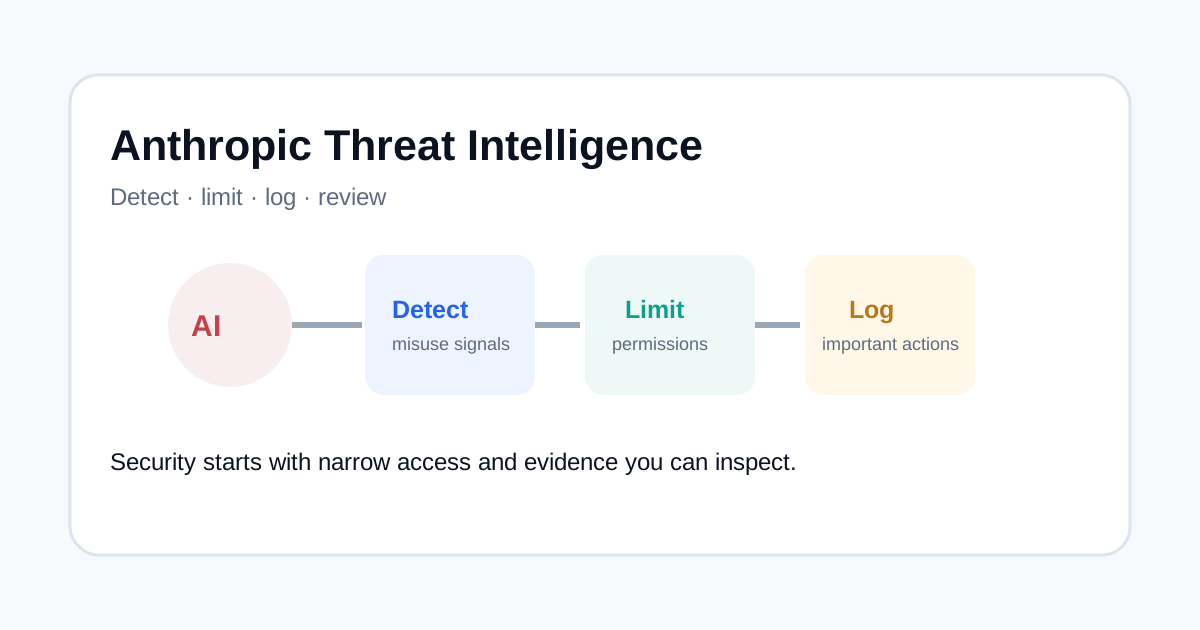
Anthropic’s September 2026 threat intelligence report describes real-world attempts to misuse Claude across cyber operations, influence operations, surveillance, scams and fraud, biological misuse, conventional weapons development and illicit distillation. The useful lesson for product and security teams is broader than any single case: AI systems need monitoring, abuse detection and limits around sensitive actions.
What Anthropic reported
Anthropic says its Threat Intelligence team identified and disrupted misuse activity over the eight months covered by the report, from December 2025 through August 2026. The company says it used findings from these cases to strengthen safeguards and shared intelligence with authorities and industry partners where appropriate.
Why this matters for normal teams
Most businesses are not dealing with nation-state activity or advanced abuse campaigns. The operational lesson still applies. An AI assistant with access to internal files, browsers, code, email or production systems can create a new security boundary that did not exist in a simple chat workflow.
Separate model access from sensitive actions
One practical control is to give an agent access only to the tools it needs. A research agent can read approved sources without getting write access to a production system. A coding agent can work in a sandbox without being allowed to deploy directly. This limits the impact of mistakes and makes investigations easier.
| Control | Question to ask |
|---|---|
| Permissions | Which tools can the agent call? |
| Data | Which files and records can it read? |
| Actions | Which actions need approval? |
| Monitoring | What evidence is saved for each action? |
Use logs as an investigation record
Agent logs should capture the task, relevant inputs, tool calls, returned evidence and final action. Avoid storing unnecessary sensitive data, but keep enough context to reconstruct what happened. ToolBoxKart’s AI agent audit-log guide covers the evidence model in more detail.
Do not confuse capability with intent
A system being capable of a risky task does not mean every user will use it for that purpose. Teams should focus on observable behavior, permissions and controls instead of assuming intent. Anthropic’s report is about documented misuse cases; it should not be read as a claim that normal Claude use is malicious.
What SEO and automation teams should change
If AI agents are used for technical SEO, content publishing or website operations, use staged permissions. Let an agent research and prepare changes first. Require validation before an action that affects production. Keep deployment credentials outside client-side code and never expose secrets in prompts or generated files.
FAQ
Does Anthropic say all AI use is unsafe?
No. The report focuses on observed misuse and the safeguards Anthropic is using to detect and disrupt it.
What is the most useful takeaway for a small team?
Start with narrow permissions, clear approval boundaries and logs that let you reconstruct important agent actions.