Anthropic CEO Dario Amodei has called for the AI industry to slow the pace of development so safety systems can catch up. OpenAI CEO Sam Altman has also backed the call. For teams using Claude, the useful lesson is practical: faster models and stronger agents need stronger controls around access, testing and deployment.
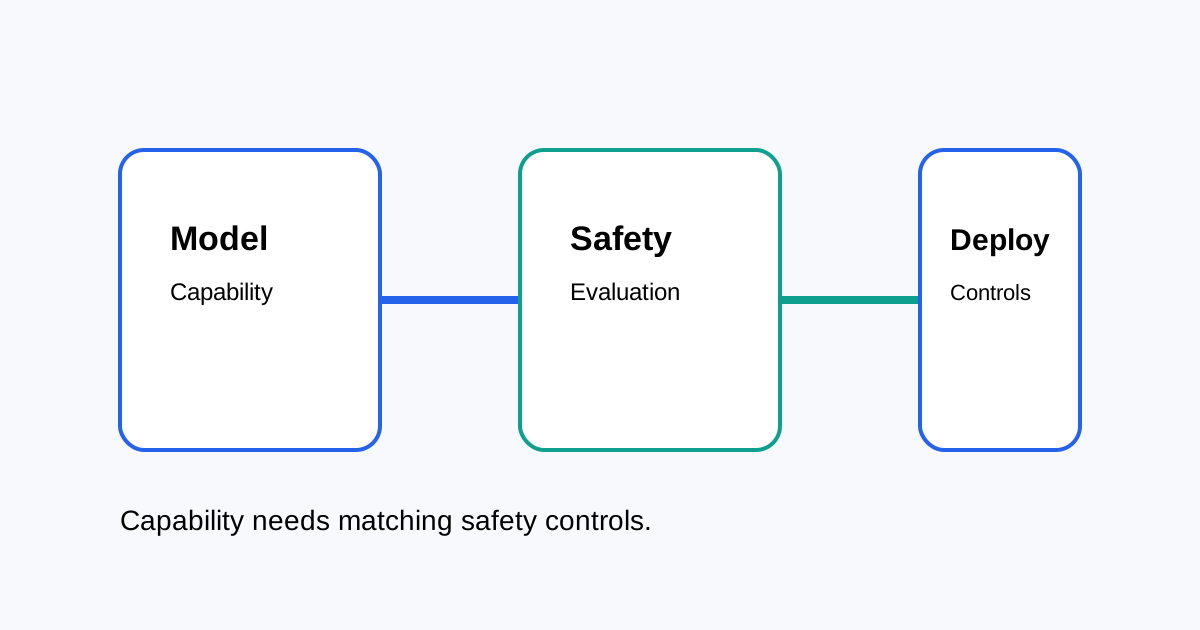
What Anthropic is warning about
Amodei argues that AI capability is moving faster than the safeguards used to evaluate and control advanced systems. AP reports that he proposed more external evaluation, stronger coordination and time for safety measures to catch up.
Why this matters to Claude users
Most businesses are not training frontier models. They are connecting models to data, browsers, code repositories and business tools. That means the biggest practical risk often sits in the surrounding system rather than the model alone.
Three controls every Claude agent should have
- Least-privilege access to tools and data.
- Human approval for high-impact actions.
- Logs that record permissions, tool calls and outcomes.
These controls limit the damage when a model misunderstands a request or a connected system behaves unexpectedly.
Do not confuse evaluation with a benchmark score
A model benchmark measures a defined capability. A production evaluation should test the full workflow: prompts, retrieval, tools, permissions, retries and external side effects. A strong model can still be unsafe when the surrounding application grants too much authority.
How to add a safety gate
- Classify every agent action as read, write or high impact.
- Allow low-risk reads automatically where appropriate.
- Require approval before external side effects.
- Record the policy version and approval result.
- Test denied, failed and repeated actions.
What teams should do now
Do not stop useful AI work because of a headline. Instead, review the permissions around your highest-value workflows. Remove unused credentials, narrow tool access and test what happens when an agent receives incomplete or conflicting instructions.
Related ToolBoxKart guides
For Claude security incidents, read Anthropic Claude cyber incident lessons. For permissions, use How to Audit AI Agent Permissions. For approval design, see Human Approval Gates. For logging, read AI Agent Audit Logs.
Frequently asked questions
Did Anthropic ask companies to stop AI development?
No. The proposal is about slowing the pace enough for safety measures and independent evaluation to catch up.
Does a stronger model remove the need for human approval?
No. Higher capability can increase the value of an agent, but it does not remove the need for policy controls.
What should a small business review first?
Start with connected credentials, write access, approval rules and logs for external actions.
Sources
- AP — Anthropic CEO calls for AI safety measures to catch up
- The Guardian — AI leaders back calls to slow development