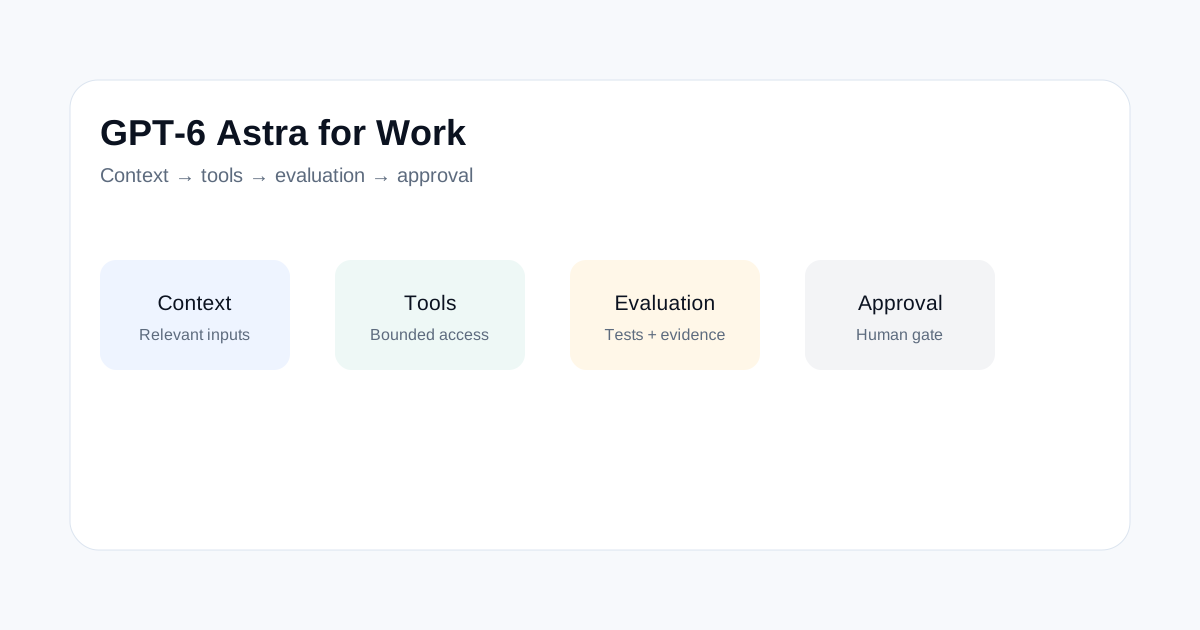
OpenAI says GPT-6 Astra is now available in ChatGPT Work, Codex and the API. For teams, the interesting part is not the model name. It is the shift toward using a stronger reasoning model inside real work systems where context, tools and approvals matter.
Start with the task, not the model
Before using a frontier model, define the job it needs to complete. A good task has a clear input, expected output, allowed tools and a measurable success condition. This makes evaluation easier and prevents the model from becoming a vague general assistant.
A safer work pattern
- Collect the minimum required context.
- Ask the model to plan before taking external actions.
- Limit tool permissions to the current task.
- Validate important outputs against source data.
- Require approval for high-impact actions.
- Record the final result and important tool calls.
Long context still needs structure
A large context window can reduce the need to split information, but it does not remove the need for good information architecture. Put authoritative sources first, label documents clearly and separate instructions from reference material.
Evaluate the complete workflow
| Test | Expected result |
|---|---|
| Normal task | Useful answer with correct evidence. |
| Ambiguous request | Agent asks or safely limits the action. |
| Denied tool | No bypass attempt. |
| Bad source | Agent flags uncertainty. |
| External action | Approval follows your policy. |
What SEO teams can learn
SEO workflows can use stronger reasoning models for technical audits, content analysis and data interpretation. But a model should not be allowed to publish large batches, change redirects or alter templates without a review step. The safest automation is the one where every high-impact action has a clear boundary.
Related ToolBoxKart guides
For earlier ChatGPT context, read the ChatGPT Work and Codex guide, the GPT-6 Astra voice update, the Google account connection guide, and the coding assistant comparison.
Frequently asked questions
Should every task use GPT-6 Astra?
No. Match the model and cost to the complexity and risk of the task.
Does better reasoning remove the need for review?
No. Review is still needed whenever an output can create meaningful external impact.