China AI Medical Imaging Ethics Guidelines: 6 Principles Explained

What changed with China's AI medical imaging guidelines?
Can AI make the final medical imaging decision?
What do the guidelines say about consent and health data?
How do the guidelines address fairness and safety?
Why does this matter for AI developers?
China has published new ethics guidance for artificial intelligence medical imaging research, covering algorithm development, trial verification and clinical application. The Ministry of Science and Technology published the guidance on August 27, while Chinese state media reported the release again on August 29.
The timing matters because medical imaging AI works with sensitive health data and can influence clinical decisions. The guidance sets a clear boundary: AI can assist medical work, but people remain responsible for final decisions.
What changed with China's AI medical imaging guidelines?
The new guidance creates a specific ethics framework for AI medical imaging research. China's Ministry of Science and Technology says the National Science and Technology Ethics Committee medical ethics subcommittee prepared the guidance for research institutions and researchers.
The official ministry notice was published on August 27, 2026. Xinhua reporting published on August 29 says the guidance covers algorithm development, trial verification and clinical application, making it broader than a simple model-testing checklist.
What are the six principles?
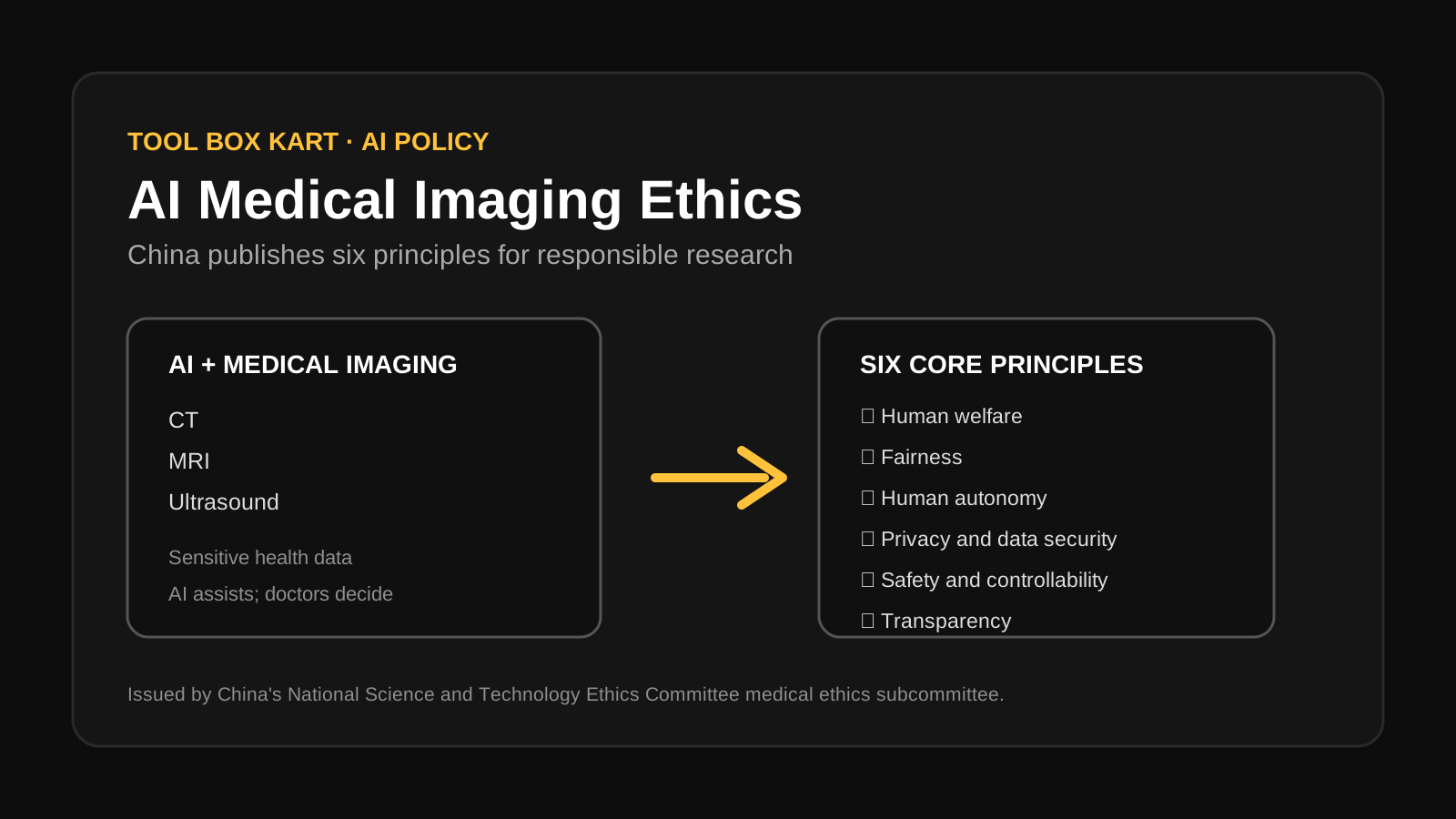
The guidance sets six core principles that shape how AI medical imaging research should be handled. They are human welfare, fairness, respect for human autonomy, privacy and data security, safety and controllability, and transparency.
Why is human welfare the first principle?
The framework puts patients' health interests first. That matters because better model accuracy is not enough if a system creates new privacy, bias, safety or accountability risks.
Why are fairness and autonomy separate?
Fairness concerns whether an AI system works without avoidable bias across different groups and datasets. Autonomy concerns the person's ability to understand and control participation, including consent and the right to withdraw authorization.
Can AI make the final medical imaging decision?
No. The guidance says AI outputs should not be used as final diagnoses, and doctors retain final decision-making authority.
This is an important governance distinction. An AI system can analyze CT, MRI or ultrasound images and help identify possible lesions, but the output is an aid to clinical judgment rather than a replacement for the accountable human decision-maker.
The approach also creates a clear audit question for developers: where does the model stop and where does human responsibility begin?
What do the guidelines say about consent and health data?
The guidance requires researchers to obtain informed consent from participants. Participants also have the right to withdraw their authorization at any time.
That requirement matters because medical imaging datasets can contain highly sensitive information. A research team therefore needs more than a technically useful dataset; it needs a valid process for collecting, using and protecting the data.
Privacy and data security are listed as one of the six core principles. For AI developers, that makes data governance part of the research design rather than something to add after model development.
How do the guidelines address fairness and safety?
The guidance says researchers should pay attention to algorithmic fairness and should not exaggerate model performance. That directly targets two common risks in medical AI: uneven performance caused by unbalanced training samples and overstated claims that can influence adoption.
Safety and controllability are also named as core principles. In practice, that points teams toward testing how a system behaves, how its outputs are reviewed, and how people can control or stop its use when necessary.
Why does this matter for AI developers?
The guidance gives developers a practical reminder that model quality is only one part of a high-stakes AI system. Data collection, consent, bias testing, safety controls, transparency and human oversight all affect whether a system can be used responsibly.
It also shows how AI governance is becoming more specific by application. Instead of treating every AI system as the same, the guidance focuses on the risks created by medical imaging data and clinical decision support.
That trend matters beyond China. Developers building AI for healthcare, finance, legal work or other high-impact areas increasingly need to document not just what a model can do, but how people control it and how its limits are communicated.
Tool Box Kart has also covered broader AI security concerns in 100+ Tech Firms Warn of AI Cyberattack Surge. The common thread is governance: stronger AI systems need stronger controls around how they are developed and used.
What does this mean for AI and search teams?
For SEO and AI-search teams, the lesson is not to turn medical guidance into generic AI content. The useful approach is to make technical claims easy to verify and to separate official facts from analysis.
AI systems increasingly summarize policy, product and research information. Clear source attribution, accurate dates, consistent entity names and structured information make it easier for search systems and AI assistants to understand what a source actually says.
This is especially important for health-related topics, where unsupported claims can create real harm. The safest content pattern is simple: cite the primary source, explain the rule in plain English, and avoid turning a policy document into medical advice.
China AI Medical Imaging Ethics Guidelines FAQ
What are China's new AI medical imaging ethics guidelines?
They are research ethics guidelines published by China's National Science and Technology Ethics Committee medical ethics subcommittee for AI medical imaging algorithm development, trial verification and clinical application.
Can AI output be used as the final diagnosis under the guidelines?
No. The guidance says AI outputs should not be used as final diagnoses and that doctors retain final decision-making authority.
What are the six principles in the guidelines?
The six principles are human welfare, fairness, human autonomy, privacy and data security, safety and controllability, and transparency.
Do the guidelines require informed consent?
Yes. Researchers are required to obtain informed consent from participants, and participants can withdraw their authorization at any time.
Written by Deepak Parmar
Deepak Parmar is an SEO and AI-search specialist focused on technical SEO, content strategy, and search visibility.
He writes practical guides on Google Search, AI Search, AI tools, technology, and digital workflows.
Sources
- China Ministry of Science and Technology: AI Medical Imaging Research Ethics Guidelines
- Xinhua: China issues ethical guidelines for AI medical imaging
Related on Tool Box Kart: 100+ Tech Firms Warn of AI Cyberattack Surge and Structured Data Graph Viewer.